The Roadmap Is Not the Problem. You Stopped Being Sold.

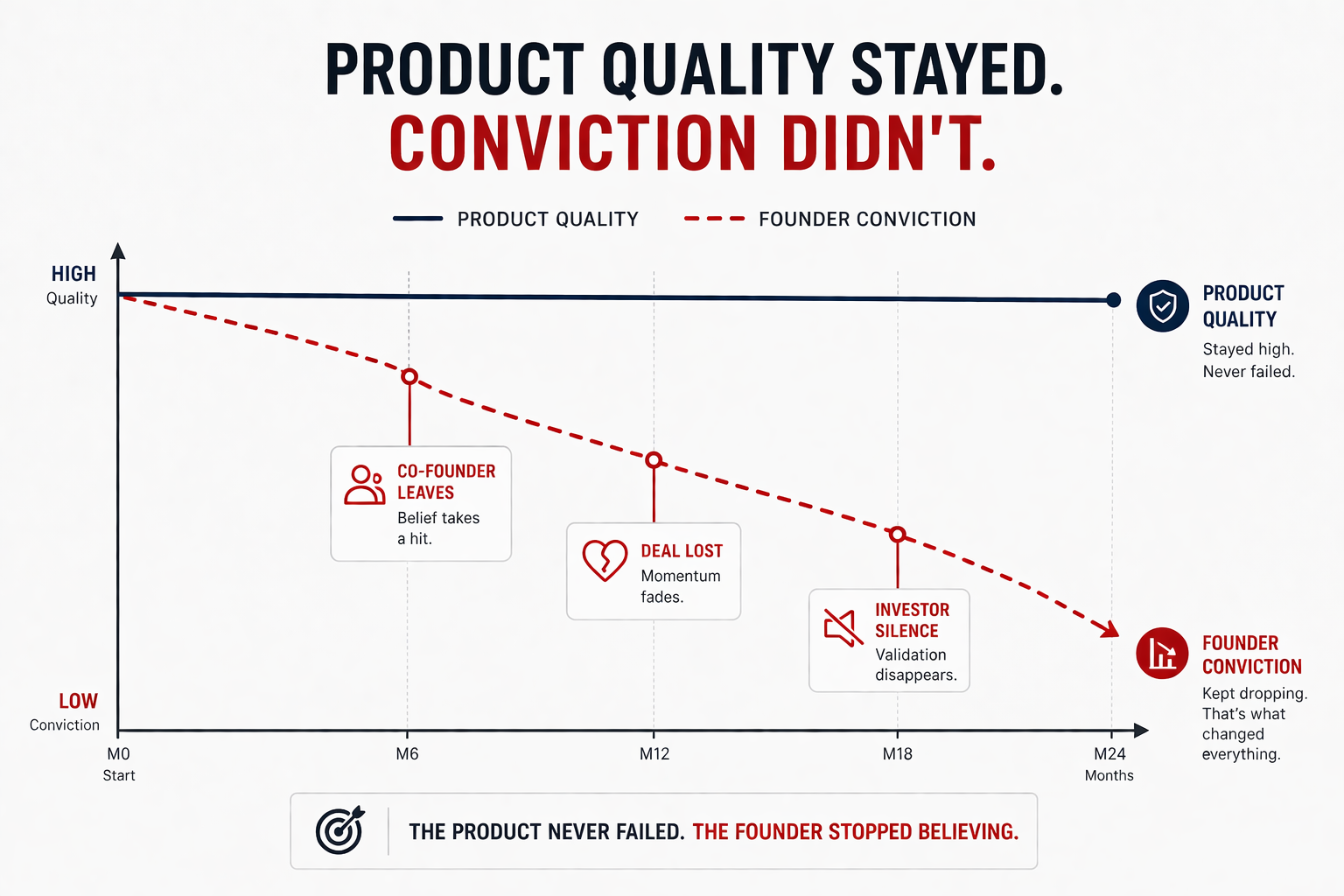
Most early-stage companies in Africa do not die because the product is bad. They die when the founder gets tired, starts doubting the thing, and drifts from the reason they built it in the first place. I have watched it happen in my own work, and I have watched it happen to founders I respect who slowly walked away from something they once believed in.
The signal is almost always the same. Sales slow down. Pipeline conversations stall. A few deals that should have closed don't. And the reflex, every single time, is to go back to the product.
Add a feature. Redesign the onboarding. Rebuild the pricing page. Ship harder. Code through the weekend.
It feels productive because it is the kind of work technical founders are good at. It is measurable. It has a commit history. You can point to it on a Monday standup and say, look, we did something.
But it is almost never the fix. I learned that the expensive way with Pasella.
The feature that was really a distraction
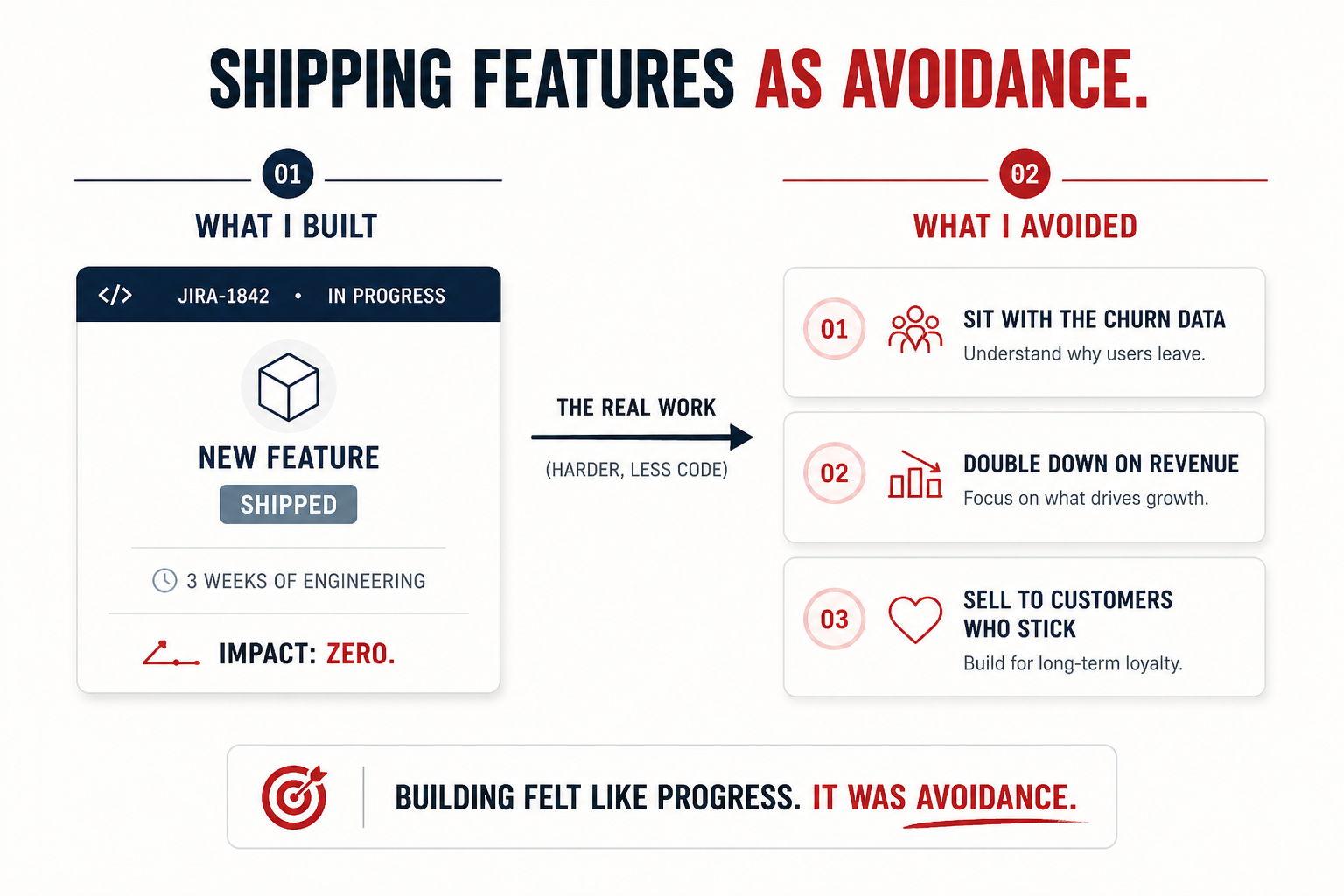
At one point with Pasella, our numbers were softening. Churn was creeping up among customers we thought were sticky. New sales had slowed. Instead of sitting down with the data and asking what was actually leaking, I did what most technical founders do. I built.
I spent weeks, expensive weeks, shipping a new feature I had convinced myself would change the trajectory. It did not. The customers who were churning were not churning for lack of that feature. They were churning because we had not doubled down on the parts of the product already making money, and we had not sold enough. We had builder's energy. We did not have seller's energy.
The feature was not the mistake. The reason I built it was the mistake.
I was not building to serve a confirmed customer need. I was building to avoid the harder conversation, which was with myself, about whether I still believed in what we had and whether I was selling it with the conviction it deserved.
What actually kills early-stage companies
If you look at why early-stage startups actually fail, "running out of cash" tops the list, but it is almost always the final cause of death, not the root problem. CB Insights' analysis of 431 shutdowns since 2023 found poor product-market fit (43%), bad timing (29%), and unsustainable unit economics (19%) were the telling causes behind the capital drying up. Push hard enough on any of those and you usually land in the same place: the founder stopped being sold on what they were building, and every decision from that point forward got made from a slightly lower floor.
The point is uncomfortable but true: if you are not sold on your own product, prospects feel it almost immediately. Any wobble in your own belief shows up in the first thirty seconds of a pitch, and the buyer feels it before you do.
I resisted this idea for a long time because it sounded like sales-guru talk. It is not. It is a brutal diagnostic. If you are not sold on your own product, that wobble shows up faster than you think, and prospects feel it before they can name it.
The co-founder departure test
The clearest moment I ever had of this with Pasella was when a co-founder left. Nothing tests your conviction quite like that. When someone who knows the product as well as you do decides it is not worth their next two years, you are forced to sit with the question: do I still believe in this, or was I just surrounded by people who believed so I did not have to check?
For months, I did not know the answer. I went through the motions. I told customers things were fine. I told the team we had a plan.
What I should have been doing was the internal work of getting sold again. Pulling out the earliest notes on why this product mattered. Looking at the customers we had actually helped. Reminding myself why I started. Instead, I tried to solve it by building, which is the founder's equivalent of stress-eating.
The honest question that fixes most sales slumps
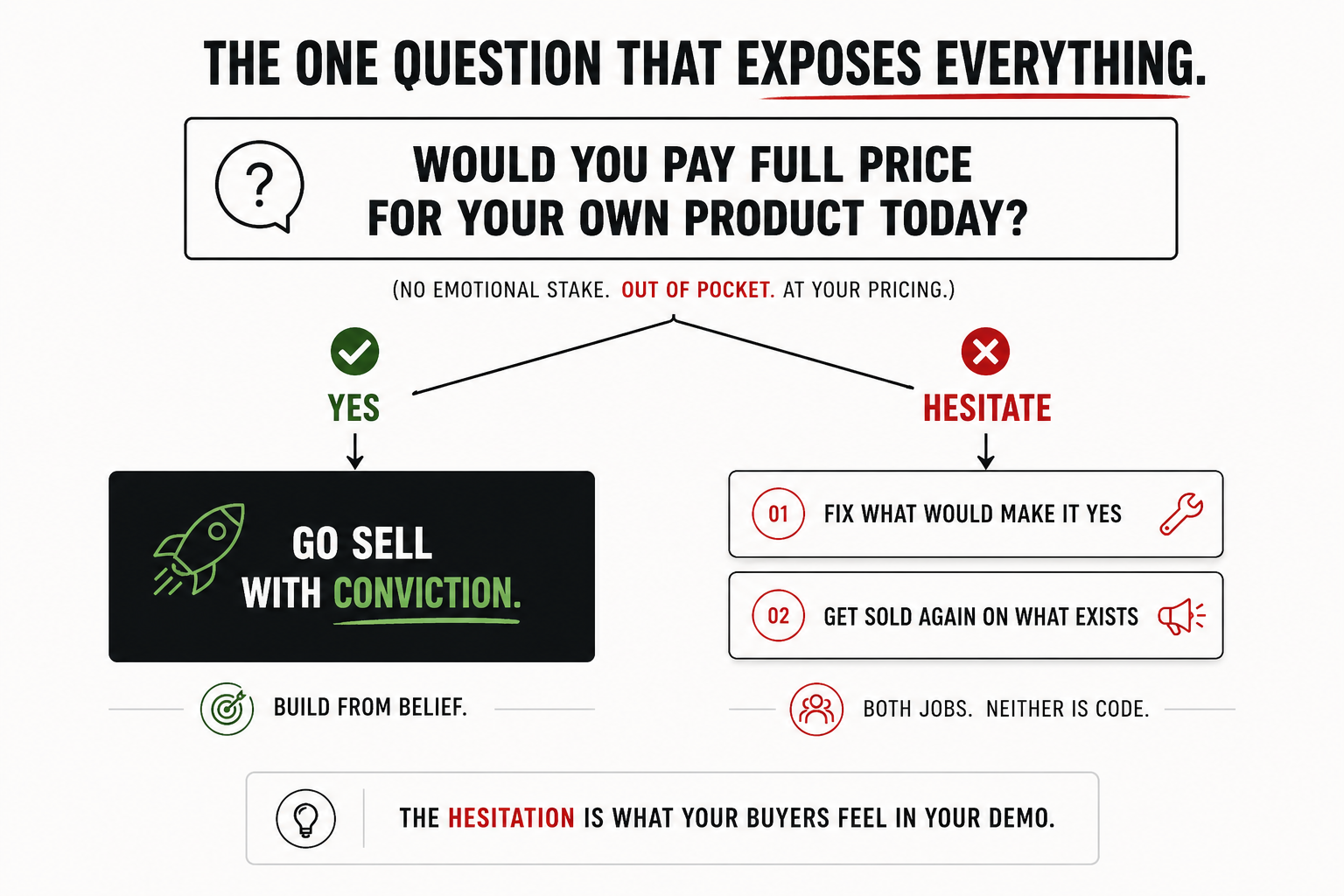
There is a test that is more useful than any sales methodology I have come across. Would you pay full price for your own product today, as a customer with no emotional stake in it?
Not would you recommend it. Would you pay. Out of your own pocket. At the price on your pricing page.
If you hesitate, that hesitation is exactly what your prospects are picking up in your demos, your emails, your negotiation calls. They cannot articulate it, but they feel it. And they walk away.
If you cannot answer yes, you have two jobs, and neither of them is shipping a feature.
The first is to figure out what you would need to change about the product for the answer to be yes at the current price. Is it a missing capability, a positioning problem, a wrong target customer, a pricing model that does not fit the value? Fix that, and only that.
The second, which is harder, is to get sold again on what you have already built. Go back and list the reasons you started. List the customers who have genuinely benefited. List the specific moments where the product did exactly what you said it would. Not for a pitch deck. For yourself.
What I did when the silence got loud
There was a stretch with Pasella where I pitched to partners and investors and got silence in return. Not rejection. Silence, which is worse. You do not know what to fix. You just know you did not land.
I now think most of that silence was not about the product. It was about the fact that I walked into those rooms with a conviction I had not actively maintained. I had stopped doing the work of selling myself on Pasella every day. I assumed the conviction from two years earlier would hold, and it did not.
Conviction is not a trait. It is a practice. When you stop practising it, it leaks out of every pitch, every cold email, every customer call, in ways you cannot see but everyone in the room can feel.